
Septoplasty in Dubai – How Better Breathing Improves Sleep, Training & Daily Performance

Expertise You Can Trust
Septoplasty in Dubai — Breathe Better, Live Better
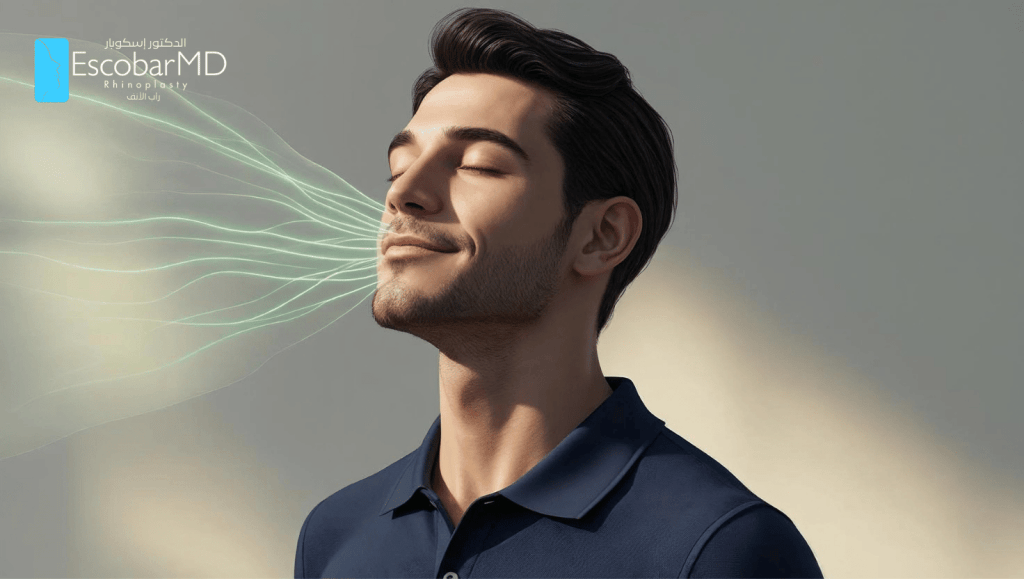
Poor nasal breathing affects more than you think.
If you struggle with chronic congestion, snoring, or shortness of breath during exercise, the cause may be a deviated septum—the cartilage-and-bone wall inside the nose. When the septum is crooked, airflow becomes blocked or turbulent, forcing your body to compensate in ways that can impact overall health.
How a deviated septum affects daily life
Reduced nasal airflow doesn’t just affect comfort. It can:
- Limit oxygen during workouts, lowering stamina and performance
- Cause mouth breathing, snoring, and even sleep apnea, leading to daytime fatigue and poor concentration
- Contribute to recurrent sinus infections, dryness, nosebleeds, and dark under-eye circles
- Over time, affect cardiovascular and neurological health due to low oxygenation
Dr. Paulo A. Escobar—ENT Consultant & Dual Board-certified Facial Plastic Surgeon —offers Advanced Septoplasty in Dubai.
On this page
What is a Septoplasty?
Straightening a deviated nasal septum to restore clear airflow and improve your nasal breathing
Septoplasty is a surgical procedure designed to straighten and realign a deviated nasal septum—the cartilage-and-bone wall that divides the nose. By correcting this misalignment, the procedure restores clear airflow, reduces obstruction, and improves nasal breathing without leaving any external scars, since all incisions are made inside the nose.
What Is the Nasal Septum?
The nasal septum is the wall that divides the nasal cavity into two passages. Its shape and position are essential for smooth, filtered, and humidified airflow.
When the septum is deviated, airflow becomes turbulent and restricted, leading to nasal congestion, obstruction, and difficulty breathing through one or both nostrils.
Why Healthy Nasal Breathing Matters?
In children, nasal breathing supports proper facial growth, sinus ventilation, and middle-ear health. Chronic mouth breathing may disrupt facial proportions and dental occlusion, and increase sinus/ear problems.
In adults, impaired nasal breathing—especially at night—causes mouth breathing, snoring, dryness, and venous congestion (dark circles under the eyes). It may worsen rhinitis, increase nosebleeds, reduce exercise tolerance, and affect cardiovascular and neurological health due to poor oxygenation.
How Septoplasty Works?
Septoplasty is performed under general anesthesia in about one hour.
No visible scars are left.
The surgeon makes internal incisions to access the septum.
The lining is lifted, and the cartilage and/or bone are reshaped or repositioned.
In some cases, silicone splints are placed to stabilize the septum and allow patients to breathe immediately during recovery.
What Septoplasty Treats?
A deviated septum can cause:
- Persistent nasal obstruction.
- Congestion and difficulty breathing during sleep or exercise.
- Recurrent sinusitis or nosebleeds.
- Sleep-disordered breathing (snoring or sleep apnea).
When symptoms affect daily life or do not improve with medical treatment, septoplasty in Dubai may be the best solution.
When Septoplasty Is Combined?
Septoplasty may be performed alone or combined with:
- Turbinate reduction (to treat chronic nasal congestion).
- Endoscopic nasal or sinus surgery (for sinus disease).
- Rhinoplasty (for cosmetic and functional improvement → septorhinoplasty).
Indications you may need a Septoplasty
A detailed internal nasal evaluation helps to confirm the diagnosis

Not everyone with nasal congestion requires surgery, but when medical treatments fail and symptoms persist, septoplasty in Dubai may be the right solution. An ENT evaluation with nasal endoscopy and, if needed, a CT scan helps confirm the diagnosis and determine whether septoplasty alone—or combined with turbinate reduction or endoscopic sinus surgery—will provide the best outcome.
7 Common Indications for Septoplasty
1. Quality-of-life impact
When breathing problems interfere with rest, work, sports, or daily activities, surgery can significantly improve well-being
2. Failure of medical treatment
When sprays (saline rinses, intranasal steroids) or medications (e.g., antihistamines for allergies) do not provide lasting relief.
3. Persistent nasal obstruction
Blockage of one or both nostrils, often worse at night or during exercise, due to a deviated septum.
4. Recurrent sinusitis or frequent nosebleeds (epistaxis)
Septal deviation can disrupt sinus drainage and irritate nasal mucosa, leading to repeated infections or bleeding.
5. Turbinate hypertrophy not controlled with sprays
Enlarged turbinates combined with septal deviation can cause constant congestion, requiring surgical correction.
6. Sleep-disordered breathing
Snoring, mouth breathing, or sleep apnea aggravated by nasal blockage can be improved with septoplasty.
7. Mouth breathing, fatigue, or facial pain
A deviated septum may create pressure points inside the nose, causing discomfort, reduced oxygen intake, and lower exercise tolerance.
How Septoplasty is Performed?
Septoplasty is performed under general anesthesia and leaves no visible external scars.
Septoplasty is a minimally invasive surgical procedure performed to straighten a deviated nasal septum and restore normal airflow. Thanks to advanced techniques, the operation is safe, leaves no external scars, and allows patients to breathe more freely from the very beginning of recovery.
Duration & Anesthesia
The procedure typically takes about 1 hour.
It is usually performed under general anesthesia, ensuring comfort and safety for the patient.
Surgical Technique
Internal incisions are made inside the nasal passages (no visible scars).
The nasal lining is gently lifted to access the septum.
The deviated cartilage and/or bone are repositioned, trimmed, or reshaped to restore proper alignment and open the nasal passages.
If needed, complementary techniques are used to reinforce the septum’s structure for greater stability and long-term results.
Closure & Stabilization
Importantly, traditional nasal packing is not required, making recovery more comfortable.
The incisions are closed with absorbable stitches that dissolve naturally.
In certain cases, silicone splints are placed to stabilize the septum while still allowing the patient to breathe comfortably from day one.
.
Septo-Rhinoplasty: Combining Septoplasty with Rhinoplasty
When aesthetics and function of the nose are addressed together, the procedure is called septo-rhinoplasty—a dual-objective surgery.
When a deviated septum compromises both nasal function and appearance, Dr. Paulo A. Escobar frequently recommends septorhinoplasty—a combined procedure that restores clear breathing while refining nasal aesthetics in a single surgery.
Why This Matters?
During any aesthetic nasal surgery, preserving and optimizing nasal function is essential. If airflow is blocked by a deviated septum, simply reshaping the outside of the nose won’t solve the underlying problem. That is why septoplasty is often performed together with rhinoplasty:
Septoplasty straightens the septum, opening the airway and restoring healthy breathing.
Rhinoplasty refines the external shape, improving harmony and balance with facial features.
By addressing both structure and appearance, patients enjoy results that are functional, natural, and long-lasting.
Why Dr. Escobar Recommends a Septal Evaluation in Every Rhinoplasty?
Dr. Escobar emphasizes that a thorough septal assessment should be part of every rhinoplasty consultation. Even in cases where the septum does not cause major breathing issues, subtle deviations or weaknesses may affect both stability and aesthetics. Identifying and correcting these at the time of surgery supports:
Comprehensive correction that avoids the need for future revision surgery.
Durable aesthetic results that remain stable over time.
Reliable breathing with improved airflow and nasal function.
The Role of the Septum in Surgery
The nasal septum is not only corrected for airflow but also often serves as a source of cartilage grafts. These grafts are used to reinforce weak areas, correct asymmetries, or provide additional support to the nasal tip or bridge. This dual use ensures that both function and aesthetics are fully addressed.
Why Combine Both Surgeries?
Functional benefit: Septoplasty straightens the nasal septum, restoring clear airflow and resolving obstruction, snoring, or recurrent sinus issues.
Aesthetic refinement: Rhinoplasty corrects cosmetic concerns such as a dorsal hump, crooked nose, or drooping tip.
Durable results: Treating function and aesthetics together ensures stability, preventing future problems that could appear if only one aspect is corrected.
How It Works?
During septo-rhinoplasty, Dr. Escobar carefully evaluates the septum, cartilage, and nasal shape.
By integrating both procedures, patients enjoy the dual benefit of improved breathing and enhanced appearance in a single surgery and recovery period.
The septum is straightened and stabilized, sometimes serving as a source of cartilage grafts for reconstructive or cosmetic refinement.
The external nose is reshaped to achieve facial harmony while preserving natural proportions.
Who Benefits Most?
This approach is especially valuable for:
Individuals who have had trauma or prior surgery that affected both function and aesthetics.
Patients with a deviated septum causing chronic obstruction or breathing issues.
Those who also want to correct cosmetic concerns (hump, asymmetry, wide bridge, drooping tip).
.
Recovery and Precautions Post-Surgery
Recovering from septoplasty is usually straightforward, but following the right care plan is essential to ensure optimal healing and lasting results.
Initial Recovery (7–10 Days)
Most patients need about 7–10 days of downtime before returning to work or daily routines.
During this stage, swelling, congestion, and mild discomfort are common but steadily improve.
Unlike traditional nose surgeries, Dr. Escobar’s advanced techniques avoid nasal packing, making recovery far more comfortable.
Deep Healing (3–6 Months)
While breathing improvement is often noticeable right away, full healing of cartilage and bone alignment takes 3–6 months.
The nose continues refining internally over this period, with subtle changes in airflow and stability.
Dr. Paulo A. Escobar personally supervises each step with customized follow-up visits to ensure safe, predictable results.
Essential Aftercare Tips
Medications: Follow prescriptions and use saline sprays exactly as directed.
Sleep elevated: Keep your head raised with 2 pillows for 10–14 days to reduce swelling and bleeding risk.
No nose blowing: For at least 2 weeks, avoid blowing your nose. Use saline sprays or irrigations instead, and sneeze with your mouth open if needed.
Gentle activity: Light walking is encouraged from day one, but avoid heavy lifting, jogging, or HIIT for 4–6 weeks. Many patients resume light training after ~3 weeks, if cleared by Dr. Escobar.
Clothing: Wear front-fastening shirts to avoid contact with the nose.
Reduce risks: Avoid hot showers, saunas, smoking, and vaping during the first weeks to minimize bleeding and swelling.
What Patients Can Expect
Confidence in results: With over 20 years of international ENT and facial plastic surgery experience, Dr. Escobar ensures that each septoplasty in Dubai is safe, effective, and tailored to individual needs.
Immediate improvement: Many patients report clearer breathing from the first day, thanks to modern splints that allow airflow during healing.
Gradual refinement: Over weeks, swelling decreases and comfort improves; over months, breathing efficiency and nasal structure stabilize.
Scarless Rhinoplasty Expertise in Dubai
Dr. Paulo A. Escobar is an ENT Consultant and Dual Board-Certified Facial Plastic Surgeon with over 20 years of international experience. He specializes in endonasal (scarless) rhinoplasty, including primary, revision, and functional procedures, delivering results that are both natural and long-lasting.
Every nose is unique—shaped by facial proportions, skin thickness, and cultural heritage. That’s why Dr. Escobar’s approach is centered on personalized planning and tailored techniques, ensuring harmony, safety, and authenticity in every case.
Recognized by patients in UAE and worldwide, Dr. Escobar combines advanced technology with refined surgical expertise to achieve results that enhance not only appearance but also confidence and well-being.

