
FAQs
Rhinoplasty
Rhinoplasty FAQs in Dubai – Nose Job Recovery, Rhinoplasty Costs & Techniques | Dr. Paulo A. Escobar
On this Page
A. General Rhinoplasty
1. What is rhinoplasty?
Rhinoplasty, also known as nose reshaping, nose job or nose surgery, is a procedure designed to enhance both the aesthetics and function of the nose.
It can correct cosmetic concerns such as a crooked nasal bridge, dorsal hump, or bulbous tip, while also treating functional issues like breathing difficulties caused by a deviated septum. By improving harmony with the rest of the face and restoring proper airflow, rhinoplasty offers patients in Dubai a balanced, natural, and lasting result.
2. Who is a good candidate for rhinoplasty?
A good candidate for rhinoplasty is a healthy patient with realistic expectations who seeks to improve the appearance of the nose, correct breathing problems, or both.
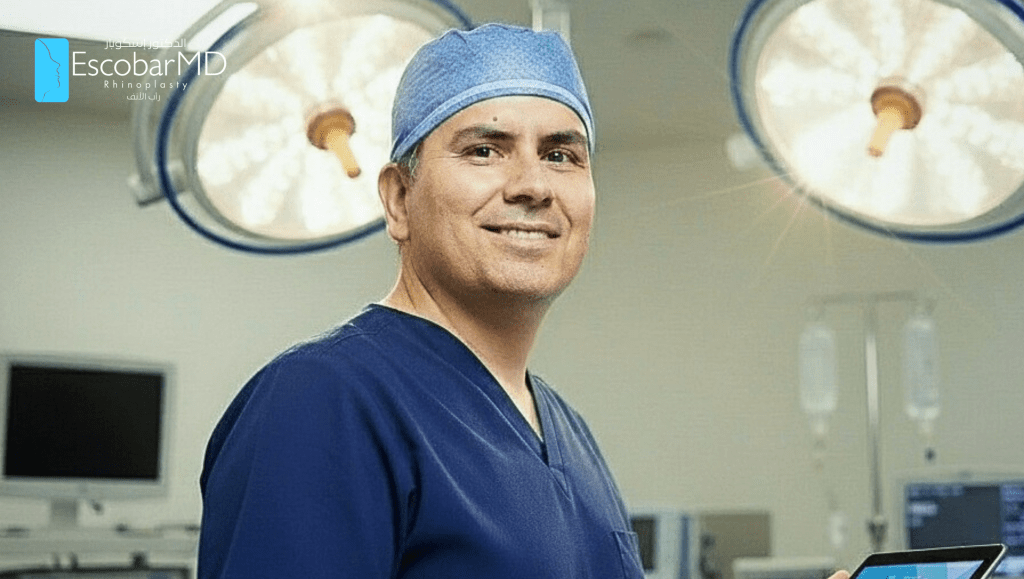
Dr. Paulo A. Escobar, Dual Board-Certified Facial Plastic Surgeon in Dubai, evaluates each case individually, tailoring the procedure to facial proportions and patient goals.
Certain medical conditions—such as cardiovascular disease, diabetes (types I and II), autoimmune disorders, or blood clotting problems—may require additional precautions. A thorough consultation, supported by clinical evaluation and pre-operative tests, helps determine whether rhinoplasty is safe and appropriate in each case.
3. How much does rhinoplasty cost in Dubai?
The cost of rhinoplasty in the UAE varies depending on the surgical technique, the complexity of the case, and the patient’s individual needs.
According to major search platforms (Google, Bing, DuckDuckGo), the starting price for an open primary rhinoplasty in Dubai ranges from AED 25,000 to 30,000. When a more advanced closed (scarless) rhinoplasty is performed, the cost is typically higher, reflecting the surgeon’s precision and expertise required for this refined approach.
Revision rhinoplasty is considerably more expensive—often more than double the cost of a primary procedure—because of the technical challenges, longer operating time, and specialized surgical training needed to correct prior surgeries.
Other factors influencing the final investment include:
- The experience and board certifications of the surgeon
- The quality and accreditation of the hospital or clinic
- The standard of perioperative and post-operative care provided
For an accurate assessment and personalized treatment plan, schedule a consultation with Dr. Paulo A. Escobar, Dual Board-Certified Facial Plastic Surgeon in Dubai, recognized for his expertise in scarless primary and revision rhinoplasty.
4. Is rhinoplasty 100% safe?
As with any surgical procedure, rhinoplasty carries potential risks such as infection, bleeding, or the need for revision. Fortunately, these complications are uncommon when the surgery is performed by an experienced, board-certified specialist.
Choosing a qualified surgeon like Dr. Paulo A. Escobar, Dual Board-Certified Facial Plastic Surgeon in Dubai, greatly reduces complications and maximizes safety. With over 20 years of expertise, Dr. Escobar focuses on delivering natural, long-lasting results while ensuring the highest standards of patient care.
5. Are rhinoplasty results permanent?
Rhinoplasty results are generally long-lasting and, in most cases, remain stable for many years. When the nasal framework is reinforced with structural grafts at the tip and dorsum, or when modern preservation techniques are used on the bridge, outcomes tend to be both natural and durable.
That said, the nose is a dynamic structure that continues to evolve with time. Factors such as natural aging, skin thickness, and individual healing patterns may cause subtle changes in shape over the years. For this reason, no surgeon can guarantee that the nose will remain completely unchanged for life—but with proper technique and post-operative care, patients can expect results that are stable, functional, and aesthetically pleasing for the long term.
B. Male Rhinoplasty FAQS
6. How is male rhinoplasty different from female rhinoplasty?
Male rhinoplasty is designed to preserve strong, straight nasal lines and proportions that enhance masculine features.
Unlike female rhinoplasty, the objective is not to create delicate curves but to maintain a natural, balanced, and functional profile. Key goals include avoiding over-reduction, keeping the nasal bridge defined, and ensuring the tip position supports a confident, masculine look.
With his expertise in male rhinoplasty in Dubai, Dr. Paulo A. Escobar tailors each procedure to respect male facial anatomy—delivering results that improve both aesthetics and breathing while maintaining a natural, masculine identity.
7. What are key anatomy factors in male rhinoplasty?
Profile balance: Refinement of dorsal humps should always be conservative, avoiding excessive removal of bone or cartilage. The objective is to maintain the nose’s natural structure and function while creating a straighter, harmonious profile that enhances masculine facial features.
Tip position: Over-resection of tip cartilage or the septum can result in an unnatural appearance. Careful analysis of each patient’s facial proportions is essential to establish the ideal nasal tip position—ensuring definition, balance, and long-term stability in male rhinoplasty.
Nasolabial angle: This is the angle formed between the lower portion of the nasal tip and the upper lip. It remains a classic reference point to evaluate whether the nasal tip is correctly positioned. In men, the ideal angle is close to 90°. Achieving this requires precise calculations and advanced surgical techniques to prevent overly rotated or feminine results.
👉 Explore more: Visit our Male Rhinoplasty Before & After Gallery to see how Dr. Paulo A. Escobar applies these principles to achieve natural, long-lasting results in Dubai
8. Why choose scarless rhinoplasty for men?
Scarless (endonasal) rhinoplasty is a highly advanced surgical technique performed entirely through hidden incisions inside the nostrils, leaving no visible external scars. This approach preserves skin quality, reduces trauma to surrounding soft tissues, and shortens recovery by minimizing swelling and bruising.
It is especially beneficial for patients—particularly men—who want to maintain a strong, masculine nasal profile while achieving subtle, natural refinements that enhance both aesthetics and breathing function. With scarless rhinoplasty in Dubai, patients enjoy natural results with improved comfort, faster healing, and long-lasting stability.
C. Surgical Techniques Questions
9. What is the difference between open and closed rhinoplasty?
Open rhinoplasty requires a small incision across the columella (the strip of skin between the nostrils). While this gives the surgeon wide visibility, it leaves a permanent external scar and may increase swelling and recovery time.
By contrast, closed (scarless) rhinoplasty hides all incisions inside the nostrils, leaving no visible scars and minimizing trauma to the skin and soft tissues. This advanced technique preserves natural anatomy and typically allows for faster recovery with less swelling.
Dr. Paulo A. Escobar, Dual Board-Certified Facial Plastic Surgeon in Dubai, is an expert in the closed approach and specializes in scarless rhinoplasty to deliver natural, functional, and long-lasting results.
10. What is scarless rhinoplasty?
Scarless rhinoplasty, also known as the endonasal or closed approach, is a highly advanced surgical technique that avoids any external incisions.
Because it is a specialized method, only rhinoplasty surgeons with advanced expertise—such as Dr. Paulo A. Escobar—perform it, offering patients greater precision and natural results.
This approach provides clear advantages: no visible scars, faster recovery, less swelling and bruising, and a lower rate of soft tissue complications. It allows for precise refinement of the nasal tip and bridge while preserving the skin’s natural quality.
Scarless rhinoplasty is especially suitable for patients who want subtle, natural refinements without the stigma of external scars.
With over 20 years of experience, Dr. Escobar—ENT Consultant and Dual Board-Certified Facial Plastic Surgeon in Dubai—has mastered this technique. His extensive expertise ensures that each case is performed with precision, safety, and artistry, delivering long-lasting results that enhance both function and aesthetics.
👉 Explore results: Visit our Before & After Gallery to see real examples of scarless rhinoplasty performed by Dr. Escobar.
11. What is ethnic rhinoplasty?
Ethnic rhinoplasty is a specialized procedure that refines the nose while respecting the unique features of patients of Middle Eastern, African, Asian, and other diverse backgrounds. Instead of applying a single standard of beauty, Dr. Paulo A. Escobar applies a Tailored Rhinoplasty approach—adapting surgical techniques to each patient’s anatomy and individuality.
The goal is to enhance natural harmony and nasal function while preserving cultural identity and authenticity. By focusing on proportion, balance, and long-term stability, ethnic rhinoplasty in Dubai delivers results that look natural, respect heritage, and improve confidence.
12. What is structural rhinoplasty?
Structural rhinoplasty is a specialized technique that uses cartilage grafts—taken from the septum, ear, or rib—combined with precise suture methods to strengthen and reshape the nasal framework.
This approach is particularly valuable in revision rhinoplasty cases, where previous surgeries may have weakened support, and in patients with naturally fragile cartilage, such as some ethnic rhinoplasty cases. By rebuilding stability and reinforcing structure, structural rhinoplasty provides long-term functional improvement and natural aesthetic refinement.
In Dubai, Dr. Paulo A. Escobar, Dual Board-Certified Facial Plastic Surgeon, applies structural rhinoplasty to deliver durable, natural-looking results that preserve both form and function.
D. Recovery & Lifestyle Questions
13. Will rhinoplasty change my voice?
Voice changes after rhinoplasty are very rare. In some cases, minor modifications inside the nose can slightly affect nasal resonance, especially in singers or professional voice users. However, these changes are almost always minimal and temporary, with no impact on daily communication.
When performed by an experienced specialist like Dr. Paulo A. Escobar, Dual Board-Certified Facial Plastic Surgeon in Dubai, the risk of noticeable or long-term voice alteration is extremely low.
14. How long does rhinoplasty recovery take?
The initial recovery period after rhinoplasty usually takes around 12–14 days, during which most patients can return to daily activities.
Swelling continues to improve over the next 1–3 months, although minor residual swelling—especially at the nasal tip—may persist for longer.
In patients with thicker skin, the final refinement and definition of the nasal tip may take up to 12–18 months. This gradual process is normal and reflects the body’s natural healing cycle. With proper post-operative care and follow-up, patients can expect a stable and natural result that continues to improve over time.
15. How soon can I return to work or exercise after rhinoplasty?
Most patients can return to work or school within 8–10 days after rhinoplasty, once the initial swelling and bruising have improved. Light daily activities are usually well tolerated during this period.
However, strenuous exercise, heavy lifting, and contact sports must be avoided for at least 4–6 weeks to allow proper healing, protect the nasal structures, and prevent complications. Following these guidelines ensures safer recovery and helps achieve long-lasting, natural results.
16. Is rhinoplasty painful?
Most patients report very little pain after rhinoplasty. Any discomfort is usually mild and can be managed with over-the-counter or prescribed pain relievers. Instead of pain, patients are more likely to experience temporary swelling, light bruising, and nasal congestion, which improve quickly during the first days of recovery.
When performed by an experienced surgeon like Dr. Paulo A. Escobar, Dual Board-Certified Facial Plastic Surgeon in Dubai, rhinoplasty is a safe procedure with a recovery process focused on comfort and natural healing.
E. Function & Revision Rhinoplasty FAQS
17. Can rhinoplasty improve breathing problems?
Yes, functional rhinoplasty can correct structural problems such as a deviated septum, collapsed nasal valves, or enlarged turbinates—restoring proper airflow and improving breathing. At the same time, it also refines the external appearance of the nose, offering both functional and aesthetic benefits in a single procedure.
As an ENT Consultant and Dual Board-Certified Facial Plastic Surgeon in Dubai, Dr. Paulo A. Escobar is uniquely qualified to manage both aspects with precision—ensuring natural results that enhance nasal function, facial balance, and patient confidence.
18. What is revision rhinoplasty and when is it needed?
Revision rhinoplasty is a corrective surgery for patients who have undergone a previous nose operation with unsatisfactory results—whether cosmetic, functional, or both. It addresses problems such as asymmetry, irregular contours, collapsed nasal structures, or persistent breathing difficulties.
Dr. Paulo A. Escobar, Dual Board-Certified Facial Plastic Surgeon and ENT Consultant in Dubai, has extensive experience managing complex revision cases. He frequently applies structural rhinoplasty techniques—using cartilage grafts and advanced reconstruction methods—to restore harmony, improve function, and achieve long-lasting stability.
19. Does revision rhinoplasty cost more?
Yes, revision rhinoplasty is typically more expensive than primary rhinoplasty—often costing more than double. This is because revision surgery involves longer operating time, greater technical difficulty, and frequently requires cartilage grafts from the septum, ear, or rib to rebuild nasal support.
The final cost also depends on factors such as the complexity of the previous surgery, the patient’s anatomy, and the surgeon’s expertise. In Dubai, revision rhinoplasty is considered one of the most advanced procedures, requiring a highly trained specialist like Dr. Paulo A. Escobar, who has extensive experience managing complex secondary cases.
20. Is revision rhinoplasty worth it?
For patients experiencing breathing difficulties or dissatisfaction with the cosmetic outcome of a previous surgery, revision rhinoplasty offers a second chance. In expert hands, it can restore both nasal function and facial harmony, helping patients regain confidence and comfort.
To explore real patient outcomes, visit our Revision Rhinoplasty Before & After Gallery, where Dr. Paulo A. Escobar showcases advanced techniques and long-lasting results in Dubai.
F. Additional Considerations
21. How does thick skin affect rhinoplasty results?
Thick nasal skin can make tip definition more challenging and often prolongs swelling during recovery. This is especially common in some ethnic rhinoplasty patients.
To overcome these challenges, Dr. Paulo A. Escobar, Dual Board-Certified Facial Plastic Surgeon in Dubai, applies specialized techniques such as cartilage grafting, precise suturing, and careful refinement of the soft tissue envelope. These methods help enhance definition while respecting the nose’s natural anatomy, ensuring balanced, natural, and long-lasting results.
22. What is the role of cartilage grafts in rhinoplasty?
Cartilage grafts—commonly taken from the septum, ear, or rib—are essential tools in rhinoplasty. They provide the support, strength, and shape needed to achieve both functional stability and natural aesthetics.
They are particularly crucial in revision rhinoplasty, where previous surgeries may have weakened nasal structures, and in patients with short, weak, or collapsed cartilage frameworks. By reinforcing the nasal framework, cartilage grafts help ensure long-lasting results, stable breathing, and a harmonious facial profile.
In Dubai, Dr. Paulo A. Escobar, Dual Board-Certified Facial Plastic Surgeon, frequently applies cartilage grafting techniques to restore function and enhance definition in both primary and complex secondary rhinoplasty cases.
23. What is the best age to undergo rhinoplasty?
Rhinoplasty is generally recommended once nasal growth is fully complete. For most women, this occurs around age 16, while in men it is closer to 18. However, surgery is not only a physical consideration—it is also an emotional one.
Psychological maturity plays a key role, as it influences how patients perceive and accept the changes in their appearance. For this reason, Dr. Paulo A. Escobar, Dual Board-Certified Facial Plastic Surgeon in Dubai, usually recommends waiting until patients have completed high school. This ensures they are physically ready and emotionally prepared to undergo rhinoplasty with confidence and realistic expectations.
24. Is rhinoplasty haram in Islam?
According to various Islamic scholars and scientific publications, rhinoplasty may be considered permissible in cases of medical necessity or functional need, such as correcting breathing difficulties or significant deformities. For example, the Islamic Fiqh Academy has stated that procedures aimed at restoring lost function or correcting congenital or acquired anomalies are acceptable.
When performed purely for cosmetic reasons, however, some sources caution against altering creation without valid justification. In such cases, the decision is highly personal and should ideally be guided by one’s individual beliefs and, when appropriate, by consultation with a trusted religious advisor.
25. Why choose Dr. Paulo A. Escobar for rhinoplasty in Dubai?
Dr. Paulo A. Escobar is a Dual Board-Certified Facial Plastic Surgeon with more than 20 years of international experience in advanced rhinoplasty. He specializes in closed (scarless), structural, and complex revision techniques, delivering tailored solutions that combine aesthetic refinement with functional improvement.
Recognized as a leading rhinoplasty expert in Dubai, Dr. Escobar attracts patients from across the Middle East and internationally, thanks to his precision, artistry, and commitment to natural, long-lasting results.