
Revision Rhinoplasty
About
Scarless Revision Rhinoplasty in Dubai: A Second Chance for Your Nose

Expertise You Can Trust
In expert hands, revision rhinoplasty restores support, refines asymmetries, and improves breathing. Dr. Paulo A. Escobar tailors advanced techniques for natural and lasting results.
Revision Rhinoplasty in Dubai is a highly specialised procedure for patients who are unhappy with the results of a previous nose job—whether due to persistent asymmetry, breathing difficulties or a shape that simply doesn’t suit the face. Instead of “starting over,” revision surgery focuses on correcting specific problems: reshaping the nasal framework, improving support and restoring proper airflow.
During a revision rhinoplasty consultation, Dr. Paulo A. Escobar carefully analyses your skin thickness, internal structure, scar tissue and overall facial proportions. Based on this assessment, he designs a personalised plan that may include cartilage grafts (from the septum, ear or rib when necessary) and meticulous structural work to rebuild and refine the nose.
The objective of revision rhinoplasty in Dubai is clear: recover and optimise nasal function, refine aesthetics in harmony with your features, and help you feel confident again—with results that look natural, balanced and proportionate from every angle.
Dr. Paulo A. Escobar—ENT Consultant & Dual Board-certified Facial Plastic Surgeon —offers Advanced Revision Rhinoplasty in Dubai.
On this Page
Revision Rhinoplasty in Dubai: Key Concepts
Revision Rhinoplasty involves reshaping the nose for patients who are dissatisfied with the results of their initial surgery.
Revision rhinoplasty is one of the most demanding procedures in facial plastic surgery. Patients often seek it due to irregular contours, asymmetry, breathing problems, or dissatisfaction with the outcome of a previous surgery. While it can achieve significant improvements, the procedure requires an individualized approach, especially in patients who have undergone multiple operations. Explore the key aspects below:
Why do patients seek revision rhinoplasty in Dubai?
Common reasons include irregular nasal shape, size imbalances, functional breathing issues, or dissatisfaction with the results of a previous rhinoplasty.
What are the differences between open and closed approaches?
Open approach: Uses a small incision on the columella for full visibility but may cause more swelling, visible scarring, and risk to the nasal tip’s blood supply.
Closed approach: All incisions are inside the nostrils, leaving no external scars and better preserving natural blood supply.
Why does Dr. Escobar prefer the closed approach?
The endonasal technique avoids external scars, reduces trauma to delicate tissues, and helps maintain the blood supply to the nasal tip´s soft tissues and skin, which is especially critical in revision cases with multiple prior surgeries.
How personalized is revision rhinoplasty?
Every case is highly tailored. Dr. Escobar carefully evaluates functional and aesthetic issues to create a custom surgical plan that restores harmony, breathing, and confidence.
What is the next step for patients in Dubai?
A thorough in-person consultation with Dr. Escobar is essential to determine candidacy and design the most effective and safe approach.
The Right Candidate for Revision Rhinoplasty in Dubai
Revision rhinoplasty is one of the most complex procedures in facial plastic surgery, and selecting the right candidate is essential for achieving safe and realistic outcomes.
Revision rhinoplasty is among the most complex procedures in facial plastic surgery. Not every patient qualifies as a good candidate, since success depends on several factors including healing time, previous surgical techniques, and realistic expectations.
A personalized in-person evaluation is essential to determine whether revision surgery is appropriate and which techniques can best restore both function and appearance.
Here are the key aspects to consider:
1. How long should I wait after my first surgery?
You should wait at least 12 months before considering revision. This period allows swelling and scar tissue to settle, giving your surgeon a clear understanding of the final result and how best to plan your correction.
2. Does the type of previous surgery matter?
Yes. The techniques used in your initial procedure—whether structural, cosmetic, or functional—directly affect what is possible in revision surgery. Each prior intervention changes the nasal framework and influences the surgical options available.
3. What expectations should I have?
Revision rhinoplasty aims to improve both function and appearance, but it may not deliver a “perfect” nose. With multiple prior surgeries, complexity increases, and sometimes a staged approach is needed to achieve stable results.
4. How important is perception?
Some patients may develop an overly critical or distorted view of their nose. A responsible surgeon will provide an objective assessment and help align expectations with realistic, natural outcomes.
5. Who qualifies as the ideal candidate?
The best candidates are those who:
- Seek improvement rather than perfection.
- Understand the challenges of revision procedures.
- Value both breathing and aesthetics.
- Choose a highly experienced revision rhinoplasty surgeon.
A detailed, in-person consultation will confirm whether you are a good candidate and which techniques can help restore your confidence, balance, and nasal function.
Ultimately, the best candidates are those who seek improvement rather than perfection, who understand the challenges posed by previous surgeries, and who are committed to working with a highly experienced revision rhinoplasty surgeon. By addressing both function and aesthetics with a clear plan, revision rhinoplasty can restore balance, breathing, and confidence.
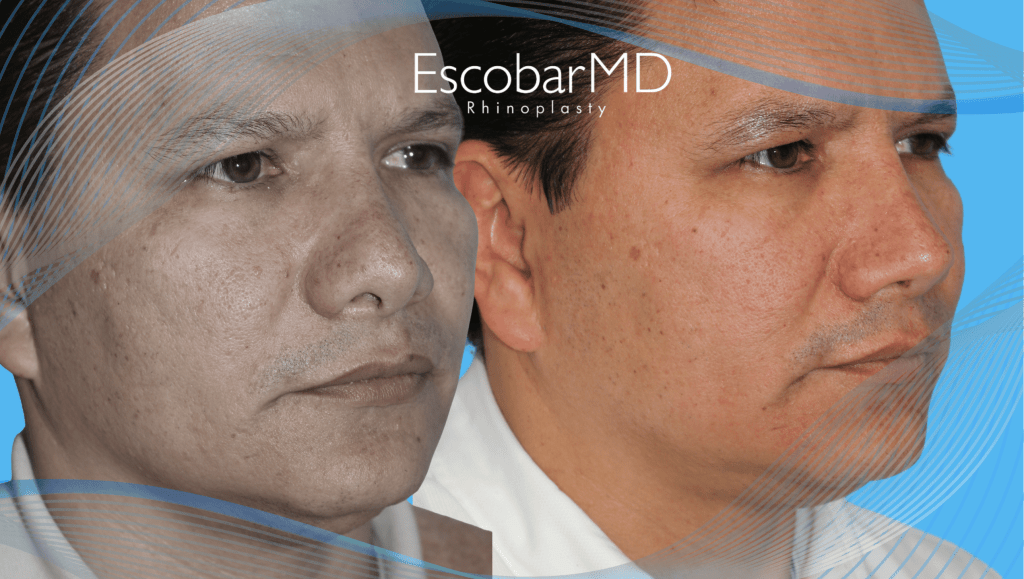
Function and Aesthetics in Revision Rhinoplasty
In revision rhinoplasty, form and function are inseparable.
Many patients seek secondary surgery because their first procedure compromised both appearance and breathing. For example, loss of tip support or over-resection of the dorsum can create visible deformities and reduce airflow. One of the most critical areas is the nasal valve (internal or external), which, if weakened or narrowed, often becomes the main cause of breathing obstruction.
Dr. Paulo A. Escobar specializes in endonasal (closed) revision rhinoplasty, a preferred approach that preserves the delicate blood supply of the nasal tip. This is especially important in complex revision cases with multiple prior surgeries, where external approaches may increase the risk of scarring, poor healing, or long-term instability.
Below are the most important concepts explained:
1. Functional Problems of the Nose in Revision Cases
What is nasal valve collapse and how does it affect breathing?
The nasal valves are the narrowest parts of the nasal airway and play a key role in breathing.
- The internal nasal valve is located inside the nose, in the area near the nasal tip, where the septum (the central partition) meets the side walls of the nose. It is the most common site of nasal obstruction.
- The external nasal valve is the space at the entrance of the nostrils, supported by the lower cartilages of the tip and the surrounding soft tissue.
When either the internal or external valve becomes too narrow or weakened—often after excessive cartilage or bone removal in a previous surgery—airflow is restricted, leading to significant breathing difficulties.
What happens when tip support is lost?
The stability of the nasal tip depends on three main support mechanisms:
- The anterior border of the septum, which acts as a central pillar.
- The intrinsic strength of the tip cartilages (lower lateral cartilages), which maintain shape and projection.
- The connection between the tip, the septum, and the cartilaginous dorsum, which integrates the nasal framework into a stable unit.
When this framework is compromised—whether by excessive resection, trauma, or previous surgery—the tip may lose its support. This can result in dynamic collapse during breathing, narrowing of the airway, and reduced overall stability of the nose
Why does dorsal instability occur?
The nasal dorsum has two key regions: the bony vault (upper, rigid part) and the middle vault (cartilaginous portion).
When the hump is excessively reduced, when too much septal cartilage is resected, or when the dorsal walls are weakened, the support of the middle and bony vaults is compromised. This not only destabilizes the framework but also narrows the airway, affecting both form and function.
Why does sidewall instability occur?
If the bony sidewalls of the dorsum are narrowed excessively without proper reconstruction, the airway loses width and stability. This collapse reduces airflow and contributes to obstruction, while also creating visible deformities.
Modern rhinoplasty techniques aim to preserve and restore these support structures, refining cosmetic aspects without sacrificing breathing function.
2. Aesthetic Problems of the Nose in Revision Cases
What happens when the nasal tip is under-rotated?
An under-rotated tip points downward, creating the appearance of a droopy or falling nose. This usually occurs when previous surgical techniques failed to provide sufficient tip support, leading to progressive descent of the tip.
What happens when the nasal tip is over-rotated?
An over-rotated tip points too far upward, giving the appearance of a “piggy” or upturned nose. On the profile view, this alters nasal harmony, and from the front, it makes the nostrils more visible and prominent
What happens when the nasal tip has poor projection?
Poor projection occurs when the nasal tip sits too close to the face, giving the nose a short or flattened appearance. This problem is commonly seen after excessive septal cartilage resection during surgery, or in patients with naturally flatter nasal structures, such as platyrrhine noses.
What happens when the nasal tip is over-projected?
Over-projection occurs when the nasal tip extends too far forward, making the nose appear overly prominent or disproportionately long. This problem is often the result of poor surgical planning and is frequently associated with excessive dorsal reduction, which exaggerates the forward position of the tip.
What are common dorsal deformities after surgery?
- Inverted-V deformity: This occurs when cartilage and bone are removed without proper reconstruction of the dorsum or nasal roof, leaving a visible “V-shaped” depression along the nasal bridge and often causing functional narrowing.
- Saddle nose: A collapsed or overly reduced dorsum creates a flattened profile and loss of structural support, which can compromise both appearance and breathing.
- Irregularities and asymmetries: Visible bumps, depressions, or uneven contours may result from excessive resection, scarring, or poor healing after surgery.
Defining Realistic Expectations
Success in revision rhinoplasty means improvement, not perfection
Any functional or aesthetic change that leaves a patient dissatisfied may justify considering a revision. It is the surgeon’s responsibility to evaluate the specifics of each case, explain pros and cons, and determine objectively whether surgery is warranted.
Is perfection possible in revision rhinoplasty?
No. The goal of revision rhinoplasty is meaningful improvement, not perfection. Each additional surgery increases complexity, and in some cases, a staged approach may be required to achieve safe and stable results. What truly defines success is achieving a natural, functional, and balanced outcome that represents a clear improvement based on your starting point and realistic expectations.
Why is the pre-operative consultation so important?
A thorough evaluation of your history, anatomy, and goals helps the surgeon design a safe, personalized plan and align expectations with achievable outcomes.

Procedure for Revision Rhinoplasty in Dubai
Revision rhinoplasty is a highly individualized procedure.
Each case requires a tailored surgical plan that addresses both function and aesthetics, especially in patients who have undergone multiple previous surgeries. Dr. Paulo A. Escobar uses advanced techniques and a meticulous approach to restore nasal support, improve breathing, and refine cosmetic appearance with long-lasting, natural results.
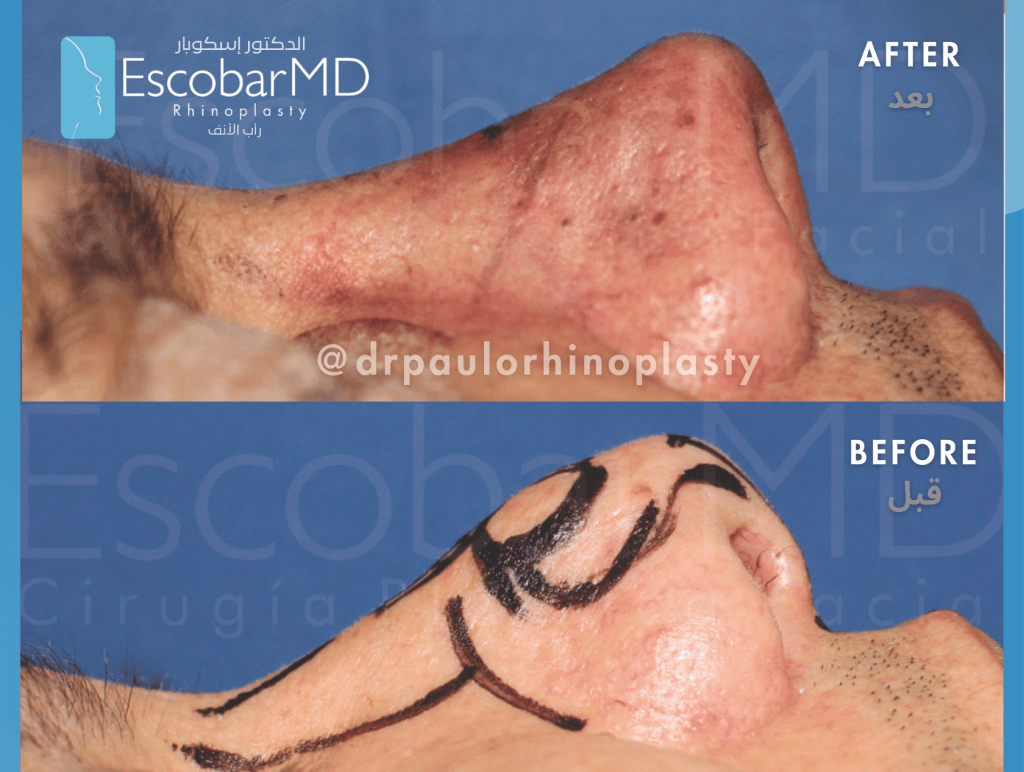
A. Technical considerations:
For your revision rhinoplasty procedure, you will receive endovenous general anesthesia. Similar to traditional rhinoplasty, Dr. Escobar performs incisions limited to the internal nasal structure, known as closed rhinoplasty, to enact the required adjustments while minimizing external scarring. Employing closed rhinoplasty techniques also reduces invasiveness and shortens recovery time.
What type of anesthesia is used in revision rhinoplasty?
Revision rhinoplasty is performed under intravenous general anesthesia, ensuring patient safety and comfort throughout the procedure.
How are the incisions made?
Dr. Escobar performs all incisions from inside the nostrils using the closed (endonasal) approach. This technique enables precise structural adjustments while leaving no visible scars, minimizing surgical invasiveness, and promoting a faster recovery.
Why are cartilage grafts important in revision rhinoplasty?
In revision rhinoplasty, cartilage grafts are often essential. A graft is a small piece of tissue—most commonly cartilage—taken from another part of the body and used to rebuild areas of the nose that have lost their natural strength or shape.
Previous surgeries, combined with the natural scarring process, can deform the nasal anatomy and weaken its structural support. Cartilage that has already been operated on becomes more fragile, which is why reinforcement is frequently needed. This principle is the foundation of structural rhinoplasty, a modern approach that revolutionized outcomes by focusing not only on reshaping the nose but also on restoring and strengthening its framework for long-term stability.
Common graft sources include:
- Septal cartilage: preferred when sufficient material remains, as it is straight and strong.
- Ear (auricular) cartilage: used when the septum is insufficient; its natural curvature makes it suitable for certain reconstructions.
- Rib (costal) cartilage: chosen for complex cases requiring larger amounts of strong cartilage.
Dr. Escobar carefully evaluates each patient to determine the most appropriate donor site. During the consultation, he explains in detail why a graft may be needed and how it will be used to rebuild strength, refine shape, and restore healthy airway function.
B. Surgical time considerations
Revision rhinoplasty is inherently more complex than a first-time (primary) procedure because prior alterations and scar tissue can change the nasal framework, limit available grafts, and influence healing behavior. As a result, the operative time required to correct structural and functional issues is often appreciably longer than in primary rhinoplasty.
Why does revision rhinoplasty take longer than primary rhinoplasty?
Revision rhinoplasty is inherently more complex due to scar tissue, altered anatomy, and limited graft material. These factors often make surgery more time-consuming than a first-time procedure.
What is the main priority during revision rhinoplasty?
Success depends on a meticulous, unhurried technique that addresses every problem thoroughly. The ultimate goal is to achieve stable breathing function and natural aesthetics that remain satisfying in the long term—not simply to finish the operation quickly.
Drawing on extensive experience with cases similar to yours, Dr. Paulo A. Escobar will explain the specific needs of your nose and outline a thoughtful plan.
Results After your Scarless Revision Rhinoplasty in Dubai



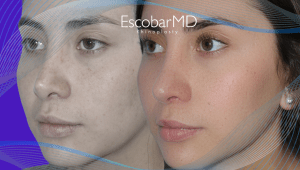
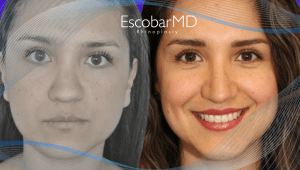
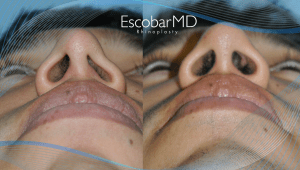
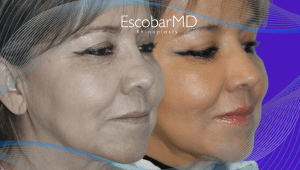
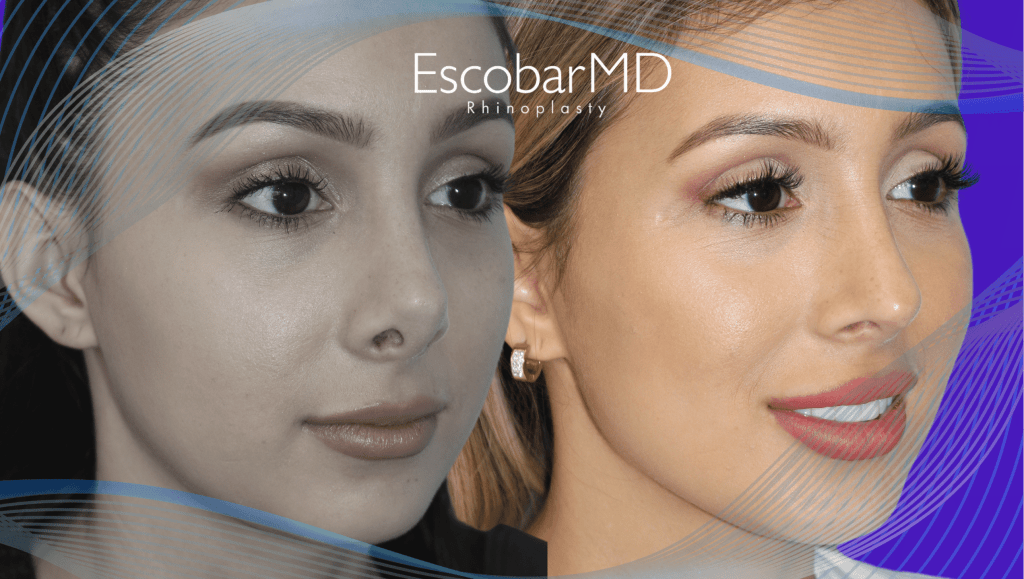
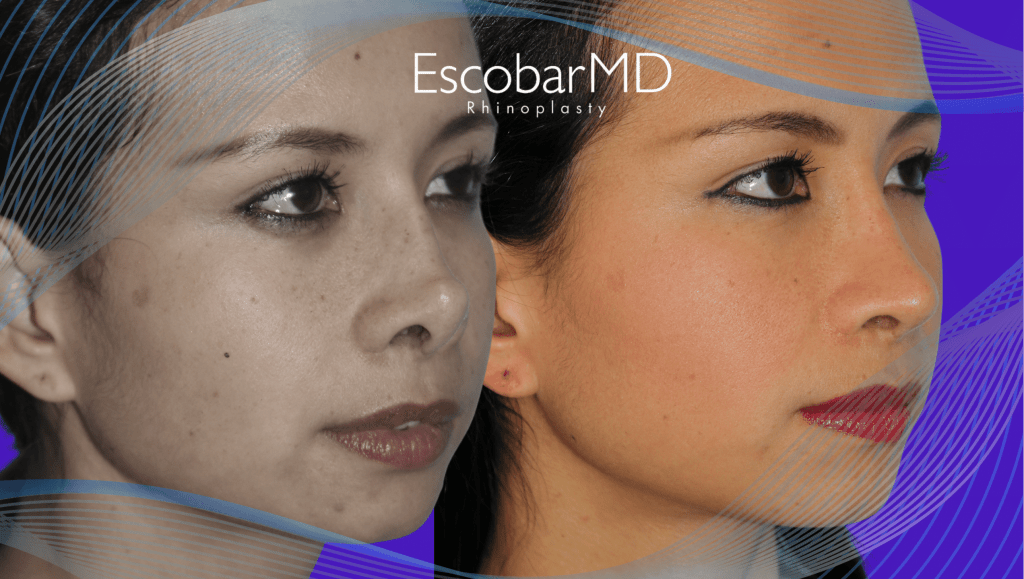
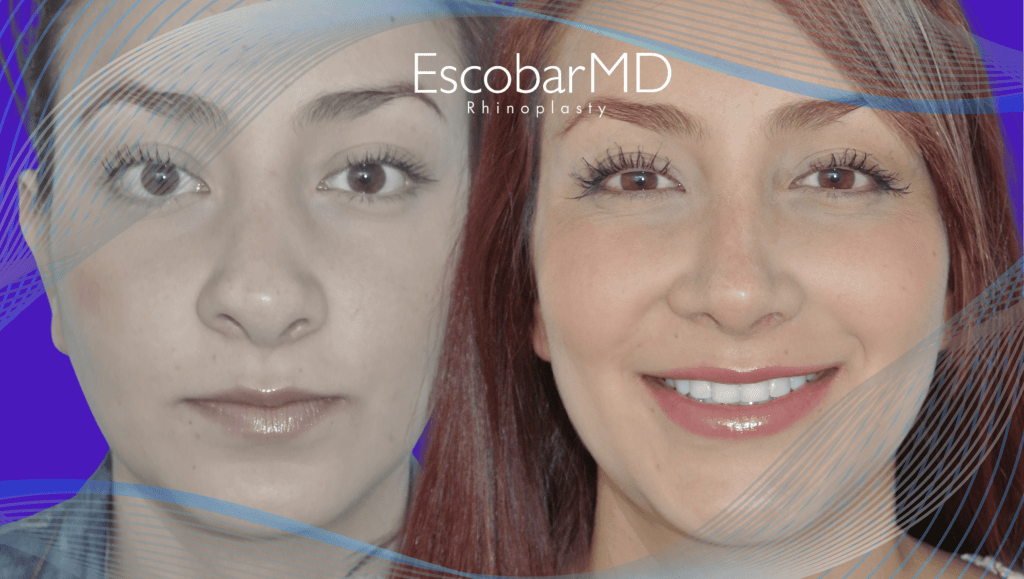
Ethical before-and-after policy: real patients, written consent, no retouching that changes outcomes, comparable conditions when feasible. Educational images—results vary. Learn More
Revision rhinoplasty results mature slowly—typically over 18 months—and in complex cases the tissues may continue refining for up to two years or longer.
As with primary rhinoplasty, revision results mature slowly—typically over 18 months—and in complex cases the tissues may continue refining for up to two years or longer. Swelling (especially at the tip) subsides in stages, so patience and long-term follow-up are important.
Because healing after a revision can be less predictable than after a first surgery (due to prior scarring and altered support), a small percentage of patients may benefit from a minor touch-up once full recovery is reached to further optimize the outcome. Dr. Paulo A. Escobar provides structured, personalized follow-up through the first year and beyond, monitoring function and aesthetics and discussing options at the right time. At every stage, he guides you toward the best achievable result for your anatomy and goals, prioritizing natural look, stable support, and healthy breathing.
FAQs about Revision Rhinoplasty with Dr. Escobar in Dubai
Why is Revision Rhinoplasty more complex than a primary nose surgery?
Revision rhinoplasty is one of the most challenging procedures in facial plastic surgery. Previous operations often leave scar tissue, weakened cartilage, or altered nasal support. These factors make correction more technically demanding, require longer surgical time, and often call for advanced grafting techniques. That is why choosing an experienced specialist such as Dr. Paulo A. Escobar, Dual Board-Certified Facial Plastic Surgeon in Dubai, is essential for long lasting and natural results.
Who is a good candidate for revision rhinoplasty in Dubai?
The best candidates are patients who have allowed their nose to fully heal after a previous surgery (usually 12 months or more), and who seek improvement rather than absolute perfection. Suitable candidates may experience breathing problems, nasal asymmetry, loss of support, or dissatisfaction with the appearance of the nose after prior surgery. A consultation with Dr. Escobar ensures a realistic, tailored surgical plan.
How long is the recovery after closed revision rhinoplasty in Dubai with Dr. Paulo A. Escobar?
Results from revision rhinoplasty take longer to mature than a first-time procedure, often a minimum of 18 months, as tissues stabilize and swelling progressively subsides. The goal is to restore balance, breathing, and confidence—not necessarily perfection. In expert hands, patients can achieve significant functional improvement and natural, long-lasting aesthetic results.
Scarless Rhinoplasty Expertise in Dubai
Dr. Paulo A. Escobar is an ENT Consultant and Dual Board-Certified Facial Plastic Surgeon with over 20 years of international experience. He specializes in endonasal (scarless) rhinoplasty, including primary, revision, and functional procedures, delivering results that are both natural and long-lasting.
Every nose is unique—shaped by facial proportions, skin thickness, and cultural heritage. That’s why Dr. Escobar’s approach is centered on personalized planning and tailored techniques, ensuring harmony, safety, and authenticity in every case.
Recognized by patients in UAE and worldwide, Dr. Escobar combines advanced technology with refined surgical expertise to achieve results that enhance not only appearance but also confidence and well-being.

