

Ethnic Rhinoplasty in Dubai – Tailored Rhinoplasty for Natural, Harmonious Results

Expertise You Can Trust
Tailored Ethnic Rhinoplasty in Dubai: Refinement that Respects Identity
There isn’t a single template for a beautiful nose. True elegance comes from balance with your facial proportions and a thoughtful respect for the heritage that shapes your features.
Historically, many “ethnic rhinoplasty” techniques relied on uniform goals that could dilute individuality. Dr. Paulo A. Escobar’s Tailored Rhinoplasty takes the opposite path. Each plan is custom-built—considering skin thickness, cartilage quality, nasal architecture, and cultural aesthetics—so refinement enhances your identity rather than replacing it.
This inclusive, precision-guided philosophy blends medical science with artistic judgment. With extensive international experience and dual board certification, Dr. Escobar designs results that look natural and proportional, restoring symmetry and improving function where needed. When appropriate, he often employs a scarless (closed/endonasal) approach, placing incisions inside the nostrils to avoid an external scar and support a smoother recovery.
The outcome: subtle, confident changes that honor who you are—delivering rhinoplasty in Dubai that preserves character, refines balance, and strengthens self-confidence.
Dr. Paulo A. Escobar—ENT Consultant & Dual Board-certified Facial Plastic Surgeon —offers Advanced Ethnic Rhinoplasty in Dubai.
On this Page

Understanding the concept of Tailored-Rhinoplasty in Dubai
Tailored-Rhinoplasty in Dubai — Refinement that Respects Heritage
Tailored Rhinoplasty adapts surgical technique to your individual anatomy and cultural heritage, not a one-size-fits-all ideal. Unlike traditional “ethnic rhinoplasty,” this approach refines your nose while preserving identity, prioritising authenticity, harmony, and proportion.
Global expertise—techniques for every origin
Dr. Paulo A. Escobar has treated patients from five continents, bringing deep, hands-on experience with diverse nasal anatomies and aesthetics—Middle Eastern, South Asian, East Asian, African/Afro-Caribbean, Hispanic, and Mediterranean. He masters the nuances that matter: skin thickness, cartilage strength, bone density, nostril shape, tip support, and cultural preferences—so the plan matches you.
The aim is not to erase heritage—but to enhance it. Expect results that look natural and proportional, with airway function safeguarded for long-term stability and confidence.
Tailored-Rhinoplasty in Dubai with Dr. Escobar: global experience, culturally attuned planning, and advanced techniques—so your results honor who you are while refining what you want.
4 Key Considerations in Tailored-Rhinoplasty
As an expert in tailored rhinoplasty, Dr. Paulo A. Escobar applies four fundamental principles to achieve harmonious and natural results:
a. Understanding the patient’s cultural background – designing results that feel authentic and aligned with heritage.
b. Evaluating nasal skin, cartilage, and bone structure – respecting both strengths and limitations.
c. Analyzing facial proportions – ensuring the nose is in balance with the entire face.
d. Assessing nasal function – prioritizing breathing health alongside aesthetic goals.
Why Surgeon Expertise Matters?
Selecting a board-certified, internationally trained facial plastic surgeon is crucial. Dr. Paulo A. Escobar, ENT Consultant and Dual Board-Certified Facial Plastic Surgeon in Dubai, combines:
- Medical precision – evidence-based techniques and advanced surgical planning.
- Artistic vision – treating each case as a balance of aesthetics and identity.
- Cultural sensitivity – deep knowledge of ethnic nasal characteristics and how to refine them without compromising authenticity.
This unique blend ensures results that are:
Long-lasting – structurally stable and balanced over time.
Natural – enhancing beauty while honoring heritage.
Functional – maintaining or improving breathing.
How Tailored Rhinoplasty Differs from “Ethnic Rhinoplasty”
For decades, ethnic rhinoplasty often imposed one-size-fits-all beauty ideals, influenced by media and fashion. This approach overlooked cultural identity and natural anatomy, sometimes leading to results that looked artificial.
By contrast, tailored rhinoplasty in Dubai adapts to the patient instead of imposing external standards:
Each surgery embraces diversity and inclusivity, ensuring results that align with cultural background and facial proportions.
Techniques are adjusted to the individual’s anatomy and heritage.
The focus is on enhancing natural features while preserving authenticity.
How is the pre-operative process
Individual analysis: Facial proportions, airway function, and tissue characteristics.
Technique selection by origin and goals: Structural and preservation methods tailored to your background and desired outcome.
Scarless option: When suitable, Dr. Escobar performs closed (endonasal) rhinoplasty with internal incisions only—no external scar and typically a smoother recovery—while protecting breathing.
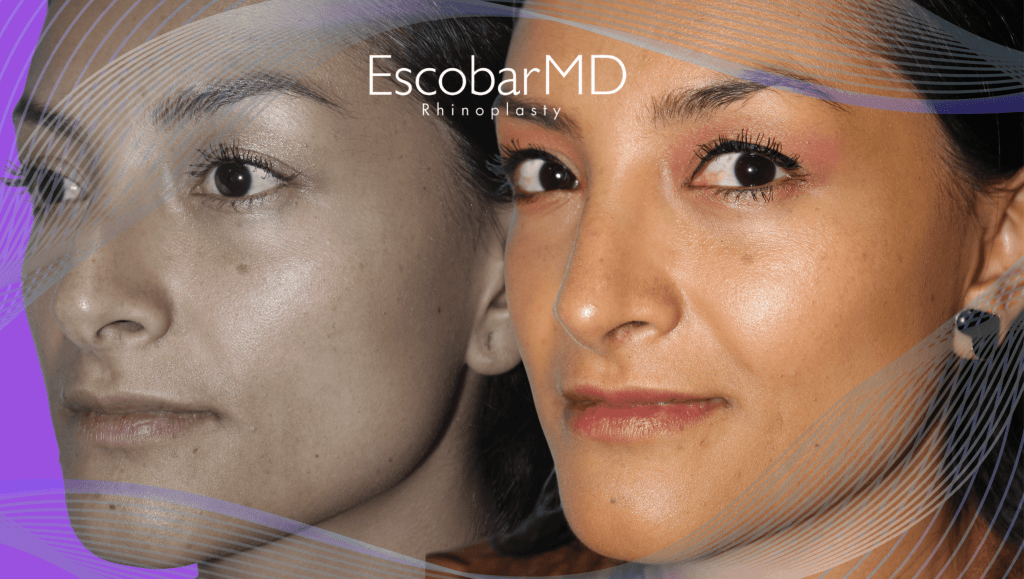
Goals of a Tailored-Rhinoplasty
Tailored-Rhinoplasty goes beyond aesthetics: its main goal is to enhance nasal harmony while respecting each patient’s cultural identity and natural anatomy.
Unlike the older ethnic rhinoplasty concept—which tried to impose a single beauty standard—tailored rhinoplasty adapts techniques to the patient’s unique proportions, heritage, and functional needs.
Every case is approached individually, but the procedure usually focuses on three primary objectives:
1. Nasal Tip Projection & Position
Many patients seek improved definition and projection of the nasal tip.
The goal is a refined yet natural tip that harmonizes with the rest of the face without losing authenticity.
Techniques often involve reinforcing the nasal septum and tip cartilages, using grafts from the septum or, in selected cases, rib cartilage.
2. Nasal dorsum Height
In some cases, when the nasal bridge or bony portion of the nose is shorter and lower than ideal. Ethnic nose surgery, can employ various techniques to correct this involving graft from ear cartilage or rib cartilage, achieving a more aesthetically pleasing nasal dorsum that appears slimmer and harmonizes with the rest of the patient’s facial proportions.
3. Nose Reduction
For patients with noses that protrude significantly from the face, nose reduction involves the correction of bone and cartilage size from the interior. This technique effectively reduces the overall size of the nose, aligning it more proportionately with other facial features.

Tailored to Every Heritage
No two noses are alike, and heritage plays a decisive role in nasal anatomy. Tailored-Rhinoplasty in Dubai, performed by Dr. Paulo A. Escobar, adapts techniques to the specific needs of patients from diverse backgrounds—always respecting cultural identity while refining balance and function.
Each profile requires a different strategy:
Why Heritage-Based Tailoring Matters?
By respecting each heritage’s unique anatomical traits, Dr. Escobar ensures that results are not “one-size-fits-all” but truly individualized:
Long-lasting – stable, natural outcomes over time.
Authentic – enhancing identity rather than erasing it.
Balanced – harmonious with facial features.
Functional – improving both form and breathing.
Hispanic Profile
Anatomical profile
Hispanic/Latino patients often reflect a blend of European, African, and Indigenous ancestry, creating unique combinations: variable skin thickness (from thin to thicker), sometimes softer/weaker alar cartilage, dorsal irregularities or a moderate hump, and, in some cases, a wider alar base depending on dominant heritage.
Special considerations
- Skin variability guides tip definition: with thicker skin, tip sutures and small cartilage grafts can enhance projection/contour; with thin skin, smoothing transitions helps avoid sharp edges or irregularities.
- A closed (scarless/endonasal) approach is preferred to avoid external scars and support a typically smoother recovery while preserving skin vascularity.
- Planning always integrates function (septum, valves, turbinates) to protect breathing.
Common concerns
- Mild drooping or underdefined tip
- Dorsal hump or uneven profile
- Wide alar base or rounder nostrils
- Septal deviation and/or valve compromise affecting airflow
Tailored techniques
- Tip refinement and support (domal sutures, columellar strut, alar batten grafts when indicated) for stable definition across skin types
- Profile correction with selective reduction or dorsal preservation to keep soft, natural lines
- Alar base adjustment (when appropriate) to improve width and shape while respecting identity
- Functional improvement via septoplasty and valve repair to optimize nasal breathing
Goal: natural results that honor the distinctive Hispanic/Latino blend—no visible external scar, stable structure, and protected breathing.
Middle-Eastern Profiles
Patients from Middle Eastern backgrounds often present thicker nasal skin, which can reduce visible tip definition.
Special considerations: thicker skin may require cartilage grafting for definition; a closed (scarless) approach is preferred to avoid visible scars.
Key concerns: drooping nasal tip, dorsal hump, wide base, and functional issues such as septal deviation.
Tailored techniques: refining and elevating the nasal tip, correcting the profile, and improving breathing with septal correction.
African Heritage Profiles
Individuals with African heritage may show a wider nasal base, shorter septum, low dorsum, thicker skin, and weaker cartilage support.
Special considerations: balance between refinement and natural ethnic identity is essential.
Key concerns: wide nostrils, low bridge, lack of projection.
Tailored techniques: narrowing the nostrils, reinforcing the septum and nasal tip with cartilage grafts, and raising the dorsum for a stronger profile.
Asian Profiles
Asian patients often seek greater projection of the tip and dorsum, as these areas tend to be lower and flatter compared to other ethnic profiles.
Special considerations: adjustments are designed to enhance harmony without erasing ethnic features.
Key concerns: flat bridge, round tip, low projection.
Tailored techniques: cartilage grafting to elevate the bridge and refine the tip while keeping a natural look.
Caucasian Profiles
Caucasian patients usually present stronger cartilage and bone structures but thinner skin, which makes irregularities more visible.
Special considerations: thin skin requires meticulous technique to avoid visible irregularities post-surgery.
Key concerns: dorsal humps, bulbous tip, crooked noses.
Tailored techniques: dorsal hump reduction, tip refinement, and the use of preservation rhinoplasty or piezoelectric instruments to smooth and reshape with precision.
Specialized Planning and Techniques
Successful tailored rhinoplasty requires more than surgical skill—it demands precise planning, cultural sensitivity, and advanced techniques. Dr. Paulo A. Escobar, ENT Consultant and Dual Board-Certified Facial Plastic Surgeon in Dubai, applies a structured method that guarantees natural, functional, and long-lasting results.
1. Comprehensive Evaluation of Anatomy & Proportions
Every consultation begins with a detailed analysis of nasal anatomy—including skin thickness, cartilage strength, airway function, and overall facial balance. Using Golden Ratio–based facial analysis, Dr. Escobar identifies each patient’s unique proportions, ensuring that refinements will respect harmony and authenticity.
2. Understanding Patient Goals & Cultural Background
The first consultation is key to understanding not only the patient’s aesthetic preferences but also their cultural identity and personal expectations. This ensures that results feel authentic—enhancing beauty while respecting heritage.
3. Advanced Computer Simulation
Patients benefit from state-of-the-art computer imaging, which allows them to preview potential outcomes. This visual planning tool aligns expectations between surgeon and patient, creating a collaborative roadmap for surgery.
4. Scarless (Closed/Endonasal) Techniques
Dr. Escobar specializes in closed rhinoplasty (endonasal), which refines nasal structures without external scars. This scarless approach allows precise modifications while reducing swelling, speeding recovery, and preserving natural appearance.
5. Expertise in Revision & Complex Cases
Many patients seek Dr. Escobar after trauma or unsuccessful surgeries. With extensive international experience in revision rhinoplasty, he applies advanced reconstructive techniques to restore both nasal function and aesthetics—delivering results that are strong, natural, and masculine or feminine depending on the case.
Recovery after your Tailored-Rhinoplasty
Recovery following tailored rhinoplasty in Dubai with Dr. Paulo A. Escobar is usually smoother and faster than with traditional techniques, thanks to his use of advanced scarless (endonasal) approaches and minimally traumatic methods. While healing varies between patients, most follow a similar timeline:
Early Recovery (First 12–14 Days)
The initial recovery phase typically lasts 12 to 14 days.
During this period, most swelling and bruising—already minimal compared to older techniques—subsides significantly.
Patients usually return to work or daily activities within 1–2 weeks, with makeup or light cover if needed.
Refinement Phase (3–12 Months)
The final result is usually visible after 9–12 months, as the skin adapts fully to the new structure.
After the first two weeks, the nose continues to refine gradually.
Subtle changes in shape and definition appear as swelling decreases.
Continuous Medical Supervision
His individualized care guarantees results that are not only aesthetic but also functional and stable.
Dr. Escobar personally monitors each stage of recovery, ensuring safety and precision throughout the process.
Follow-up visits allow him to track progress, address concerns, and give tailored guidance for optimal healing.
Benefits of a Tailored-Rhinoplasty
Choosing Tailored-Rhinoplasty in Dubai with Dr. Paulo A. Escobar offers a series of advantages that go beyond appearance. Unlike standard approaches, this modern philosophy ensures results that are authentic, functional, and respectful of cultural heritage.
Key Benefits for Patients
- Respects cultural heritage and individuality
Enhances nasal features while preserving the traits that reflect each patient’s unique identity.
2. Refines proportions without erasing identity
Subtle adjustments bring the nose into harmony with the face while avoiding a “one-size-fits-all” look.
3. Reduces nasal imperfections
Corrects concerns such as dorsal humps, drooping tips, wide bases, or asymmetries.
4. Enhances nasal size, shape, and balance
Creates a more proportional and refined nose that complements the overall facial structure.
5. Improves breathing and nasal function
Functional issues like deviated septum or airway obstruction can be addressed alongside aesthetic refinements.
6. Considers skin type and scarring potential
Each surgical plan respects skin thickness, healing patterns, and the natural limits of the anatomy.
7. Maintains structural integrity
Focus on preserving bone and cartilage strength ensures long-lasting stability.
8. Promotes facial harmony and symmetry
Adjustments are carefully planned to align the nose with lips, chin, and cheekbones.
9. Boosts self-confidence
Patients benefit from natural-looking results that improve both appearance and quality of life.
Before & After Ethnic Rhinoplasty
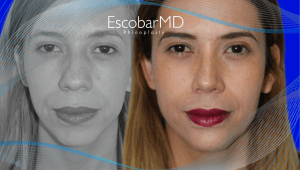
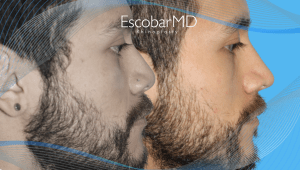
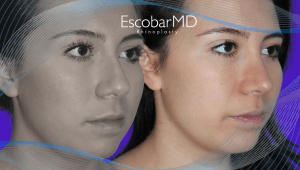

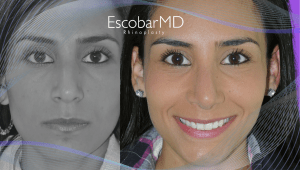


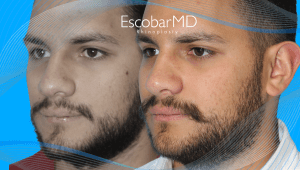
Ethical before-and-after policy: real patients, written consent, no retouching that changes outcomes, comparable conditions when feasible. Educational images—results vary. Learn More
FAQs about Tailored-Rhinoplasty
1. What is the difference between ethnic rhinoplasty and tailored rhinoplasty?
Traditional ethnic rhinoplasty often followed a one-size-fits-all approach, trying to adapt patients to a universal beauty standard. By contrast, tailored rhinoplasty in Dubai adapts surgical techniques to the patient’s unique anatomy and heritage. It respects factors such as skin thickness, cartilage strength, nasal proportions, and cultural identity—ensuring results that look natural, authentic, and functional.
2. How long does recovery take after tailored rhinoplasty?
Most patients recover from the initial swelling and bruising in 12–14 days, returning to daily activities within 1–2 weeks. However, the nose continues to refine gradually, with the final results visible after 9–12 months. Dr. Paulo A. Escobar personally supervises each stage of recovery to ensure safe healing and optimal outcomes.
3. Will tailored rhinoplasty change my ethnic identity?
No. The goal of tailored rhinoplasty is not to erase identity but to enhance it. Dr. Escobar uses advanced techniques to refine proportions, improve breathing, and bring harmony to the face, while respecting the features that define each patient’s cultural heritage. The result is a natural enhancement that looks authentic and strengthens self-confidence.
Scarless Rhinoplasty Expertise in Dubai
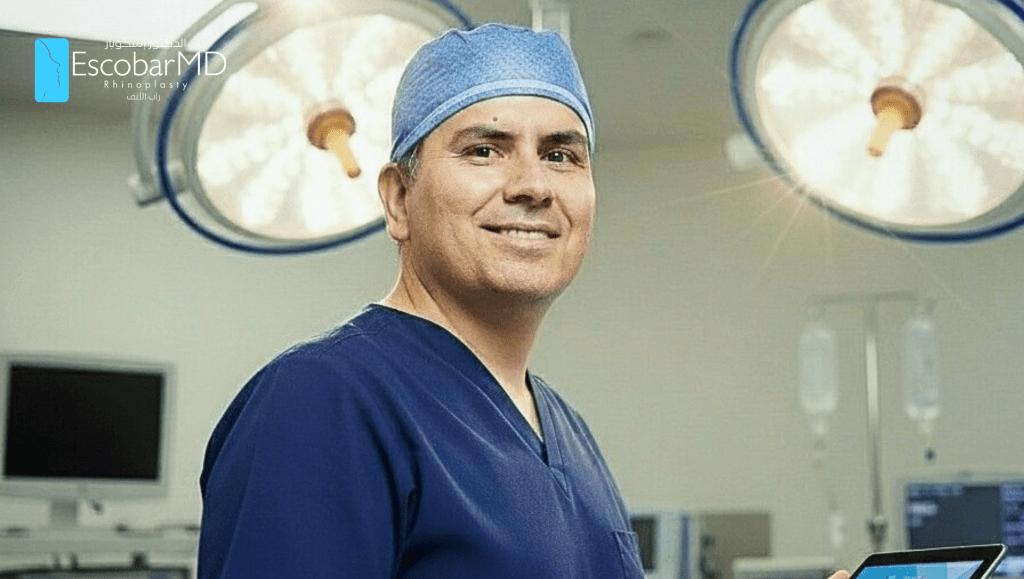
Dr. Paulo A. Escobar is an ENT Consultant and Dual Board-Certified Facial Plastic Surgeon with over 20 years of international experience. He specializes in endonasal (scarless) rhinoplasty, including primary, revision, and functional procedures, delivering results that are both natural and long-lasting.
Every nose is unique—shaped by facial proportions, skin thickness, and cultural heritage. That’s why Dr. Escobar’s approach is centered on personalized planning and tailored techniques, ensuring harmony, safety, and authenticity in every case.
Recognized by patients in UAE and worldwide, Dr. Escobar combines advanced technology with refined surgical expertise to achieve results that enhance not only appearance but also confidence and well-being.

